
Language: Dzongkha, Sharchopkha, Lhotshamkha, English
Currency: Indian Rupee (INR)
Religion: Vajrayana Buddhism, Hinduism, and other faiths
Timezone: Bhutan Time (BTT, UTC+6:00)
From ancient monasteries to a kingdom shaped by Buddhist traditions
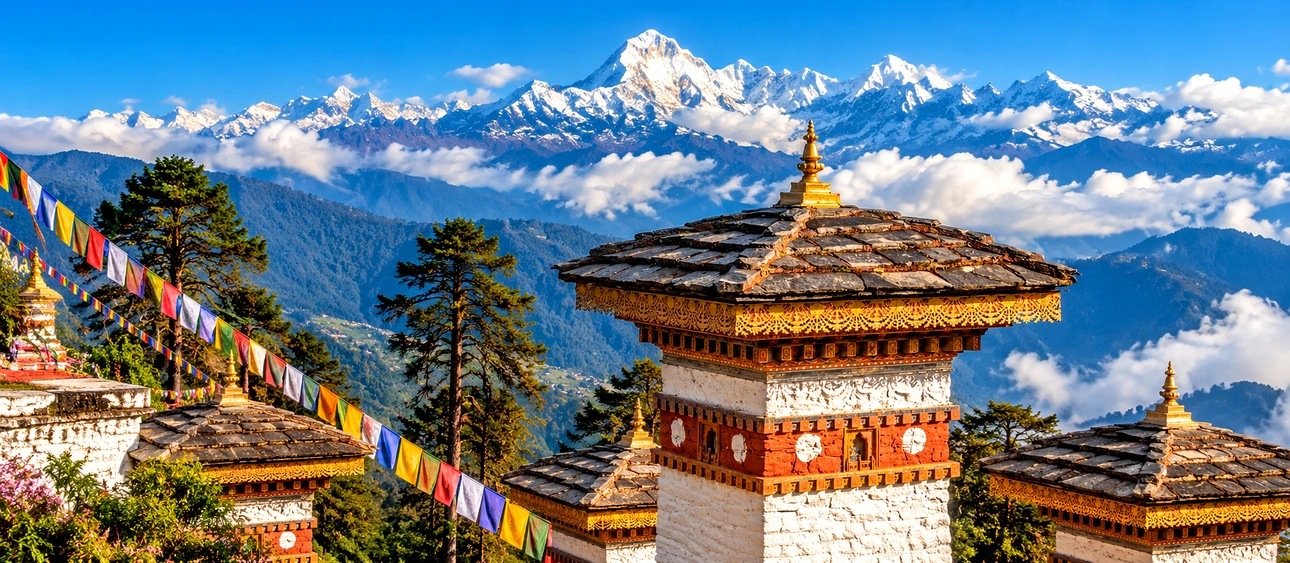
Bhutan is a captivating Himalayan kingdom known for its peaceful landscapes, colourful prayer flags, traditional architecture, and deeply rooted spiritual traditions. Its history is closely connected with the spread of Buddhism, the establishment of monastic communities, and the unification of the country under Zhabdrung Ngawang Namgyal in the 17th century. Bhutan's distinctive cultural identity continues to influence its architecture, festivals, arts, and everyday life.
Today, Bhutan is home to remarkable landmarks such as Paro Taktsang, famously known as Tiger's Nest Monastery, the impressive Punakha Dzong, and Tashichho Dzong in Thimphu. Traditional fortress-monasteries, known as dzongs, stand as important centres of religious and administrative life, while mountain villages preserve centuries-old customs and craftsmanship.
From mist-covered Himalayan valleys to peaceful monasteries perched on cliffs, Bhutan offers visitors a memorable journey through natural beauty, spirituality, and living cultural traditions.
Bhutanese cuisine is known for its bold flavours, locally grown ingredients, and generous use of chillies. One of the country's best-known dishes is Ema Datshi, a comforting preparation of chillies and cheese often served with red rice. Other popular meals include Kewa Datshi, made with potatoes and cheese, and Shamu Datshi, prepared with mushrooms and cheese.
Bhutanese red rice is a staple food valued for its distinctive colour and texture. It is commonly served alongside vegetable dishes, meat curries, and traditional cheese-based preparations. Visitors can enjoy home-style meals in local restaurants and family-run guesthouses to experience the everyday flavours of Bhutan.
Momos, or filled dumplings, are popular in Bhutan and can be enjoyed with vegetable or meat fillings. Local markets and small eateries also offer noodles, soups, and regional snacks influenced by Himalayan food traditions. Exploring these casual dining spots provides a welcoming introduction to Bhutanese food culture.
Suja, Bhutanese butter tea, is a traditional drink prepared with tea, butter, and salt. It is often enjoyed in colder mountain regions and during social gatherings. Visitors may also encounter traditional snacks and special dishes served during religious festivals and family celebrations, offering a taste of Bhutan's hospitality and cultural heritage.
