
Language: Hindi, Awadhi, Sanskrit, English
Currency: Indian Rupee (INR)
Religion: Hinduism, Islam, Jainism, Buddhism, and other faiths
Timezone: Indian Standard Time (IST, UTC+5:30)
From ancient traditions to a timeless centre of devotion
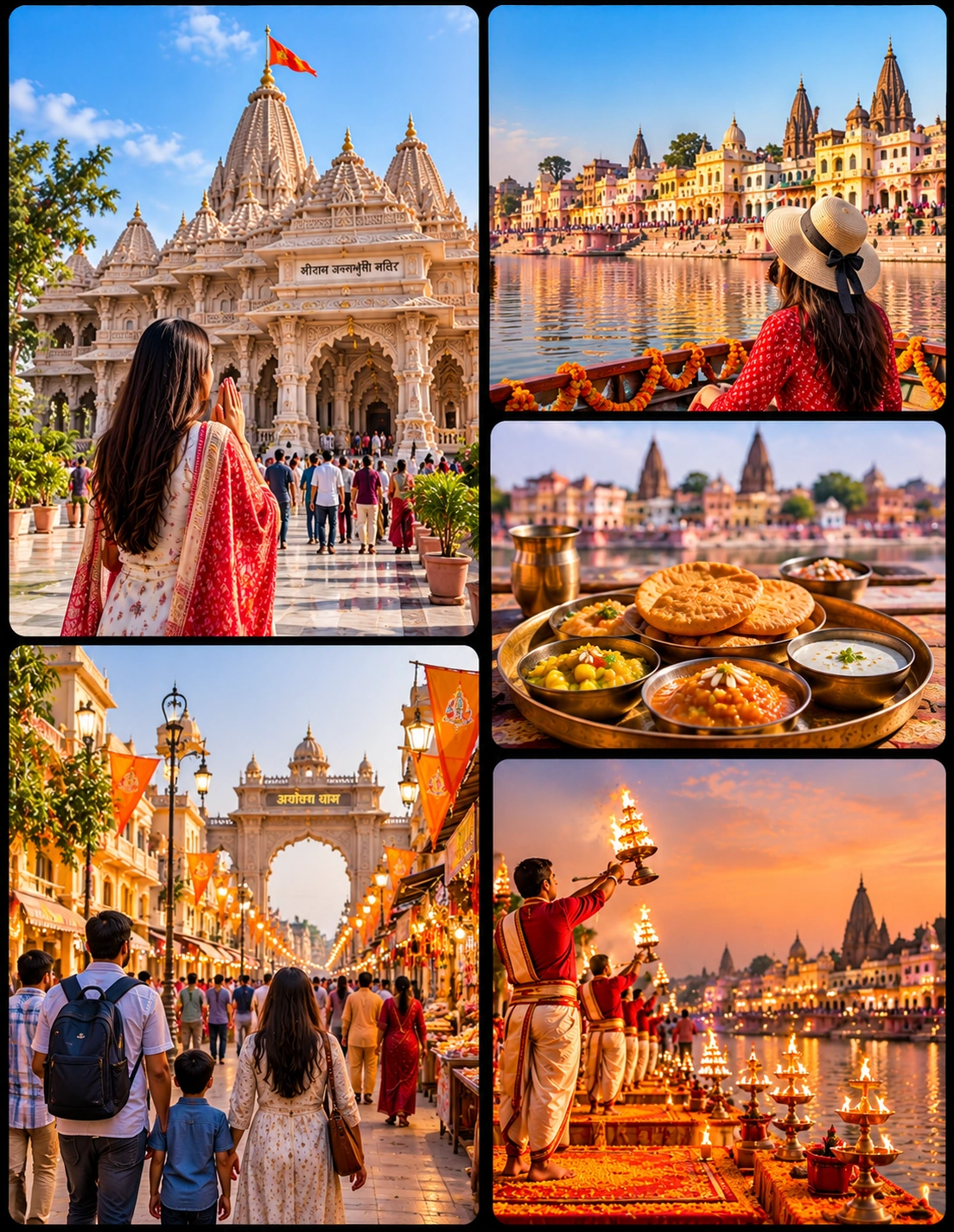
Ayodhya, situated on the banks of the sacred Sarayu River in Uttar Pradesh, is one of India's most revered religious and cultural destinations. Deeply associated with the Hindu epic Ramayana, the city is traditionally regarded as the birthplace of Lord Rama. Its long spiritual history, ancient temples, sacred riverfront, and religious traditions have made it an important pilgrimage destination for generations.
Today, Ayodhya attracts visitors to landmarks such as the Shri Ram Janmabhoomi Mandir, Hanuman Garhi, Kanak Bhawan, and the historic ghats along the Sarayu River. The city's temples, shrines, traditional markets, and religious celebrations reflect its enduring importance in India's cultural and spiritual life.
From peaceful morning prayers beside the Sarayu to the illuminated temple surroundings in the evening, Ayodhya offers a meaningful journey through faith, heritage, and traditional Indian hospitality.
Ayodhya's food culture reflects the culinary traditions of Awadh and the city's strong pilgrimage heritage. Visitors can enjoy traditional vegetarian thalis, seasonal vegetable preparations, fresh rotis, fragrant rice dishes, and simple home-style meals. Many local eateries serve satvik food prepared without onion and garlic, catering to visitors seeking traditional vegetarian dining.
Ayodhya is known for its religious offerings and traditional sweets, which are enjoyed during festivals and special occasions. Visitors can explore local sweet shops for peda, laddoo, jalebi, and other Indian mithai. These treats are closely connected with festive gatherings, devotional celebrations, and the city's welcoming food culture.
Explore the lively streets and markets around Ayodhya to discover kachori, samosa, chaat, and freshly prepared snacks. Local vendors offer a variety of flavours, from tangy chutneys to crisp savoury treats. Visiting these markets is a great way to experience everyday life and the culinary traditions of the city.
After exploring temples and riverfront attractions, visitors can enjoy traditional drinks such as lassi, fresh seasonal beverages, and refreshing lemon drinks. Depending on the season, local stalls also offer warm tea and other simple refreshments. These familiar favourites provide a relaxing break during a day of sightseeing and pilgrimage.